


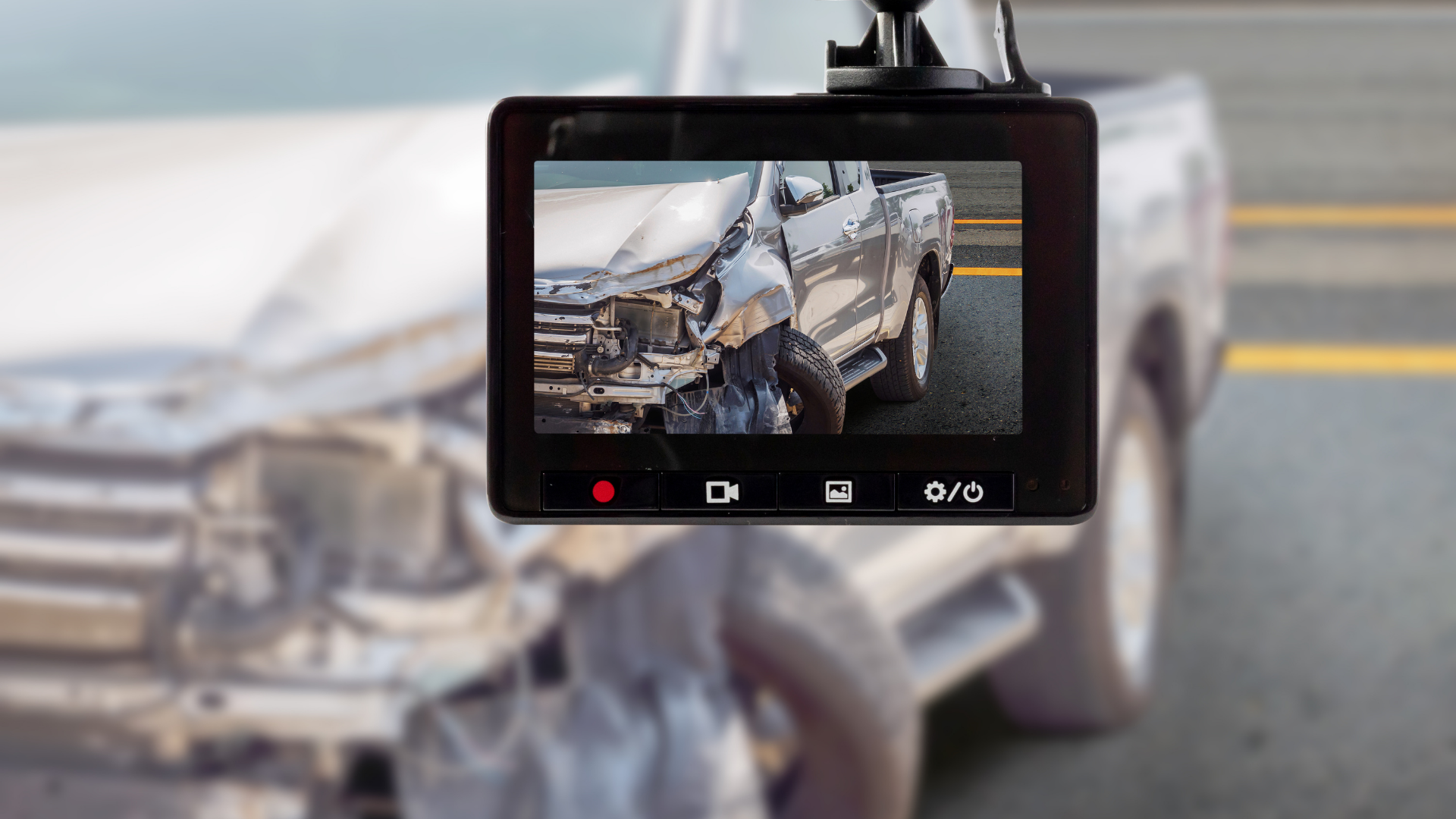
After a car accident, people often tell very different stories about what happened. One driver says the light was green. The other says it was red. Someone claims they were driving within the speed limit. And a witness remembers something different. Video can cut through those disputes and reveal the truth.
A video can be your strongest evidence in a civil case or negotiation, but you have to know how to get camera footage of a car accident. You also need to take steps as soon as possible to identify potential footage and preserve it for legal proceedings. An experienced Lakeland car accident lawyer can help you gather all the evidence you need to prove your right to compensation in a claim.
An Attorney Tim Shanahan of Maranatha Law is passionate about protecting car accident victims in Florida and has years of experience helping them get the best results in their cases. Please contact Maranatha Law today to discuss your case.
What Do You Have to Prove in a Florida Car Accident Case?
Most car accident claims depend on negligence, which means you have to prove the at-fault party failed to use reasonable care and their failure caused the accident and your damages. In some cases, the conduct may be worse than ordinary negligence. A crash could involve reckless or intentional misconduct. The precise legal theory depends on the facts.
Are there differing claims about whether a driver ran a red light or merged without looking? Traffic camera footage of a car accident in Florida or other camera footage can provide a visual record that may help answer basic liability questions. A few seconds of footage may answer questions that would otherwise require competing testimony.
What Types of Camera Footage Can You Request?
Finding useful footage starts with thinking beyond traditional “traffic cameras.” Several systems may have recorded your collision. Consider the following.
Police Bodycam Footage
Depending on the circumstances when a police officer responds to an accident, their body-worn cameras may record:
- The scene,
- Vehicle positions,
- Visible injuries,
- Witness statements,
- Driver statements,
- Road conditions, and
- Other details.
Florida law does place restrictions on some body camera recordings. Certain recordings (or portions of recordings) may be unavailable because they are confidential or exempt from disclosure. However, you may be able to fight to make those recordings available.
Dashcam or Phone Camera Footage
You might have access to helpful dashcam or phone camera footage from:
- A police vehicle,
- A commercial truck,
- A rideshare vehicle,
- Another driver, or
- A witness.
Do not limit your search to the vehicles directly involved in the collision. A vehicle or individual stopped nearby may have captured the entire crash.
Traffic Camera Footage of a Car Accident in Florida
Government agencies operate various roadways and transportation systems and may have installed cameras to monitor the premises. Multiple types of traffic cameras may help your case.
Red Light Camera Footage
Red light camera recordings or other automated enforcement recordings may be especially useful when the central dispute involves what happened at an intersection. Even if you don’t remember whether your accident occurred directly in an intersection, footage from an intersection nearby may reveal the aftermath or important details about your case.
Speed Detection Images
Florida regulates traffic and addresses moving violations in many areas by setting up speed detection cameras. The cameras can help the government issue tickets, but they can also help car accident victims prove that an at-fault driver caused a collision. The cameras are often set up in school zones and can provide images of a speeding car during a violation.
Private Surveillance Cameras
Look around the crash location. There may be more cameras taking footage than you think. You might locate cameras angled toward the street at:
- Gas stations,
- Restaurants,
- Apartment buildings,
- Shopping centers,
- Banks,
- Hotels,
- Parking lots,
- Warehouses,
- Homes, and
- Other properties.
Seeking footage from a person or establishment not involved in the crash can be a little tricky, but it’s not impossible. There are many legal tactics to help you preserve and request a surveillance video or image of the accident.
How to Get Camera Footage of a Car Accident
There is no single procedure for obtaining all images or videos. The correct approach largely depends on who controls the images and whether litigation has begun.
Getting Traffic Camera Footage of a Car Accident in Florida
Government footage from traffic cameras may qualify as a public record. And in many cases, you can request public records from the Florida Department of Transportation (FDOT) or the police department near where the accident occurred.
Public Records Request
In your FDOT record request, you may need to provide:
- Your name and contact information,
- The date and time of the accident, and
- The accident location.
In many cases, you do not need to explain why you are making your request, and you can submit it online.
Law Enforcement Records
Local law enforcement agencies may have their own procedures. You can request public records from law enforcement with jurisdiction over the area where your accident happened. You may have the option to request records online, over the phone, or in writing.
Getting Bodycam Footage from Law Enforcement
Local law enforcement typically allows requests for body-worn camera footage through its public records system. To make your request, you may need to provide specific information, such as the:
- Date,
- Time,
- Location,
- Officer’s name or badge number, and
- Case number.
You often must pay a fee before law enforcement can process your request, and you may have to pay an additional fee after processing is complete.
Getting Footage from an Involved Party
Once a lawsuit begins, Florida’s civil discovery rules provide additional tools for obtaining accident footage. And a major tool for gathering this type of evidence is the interrogatory.
Interrogatories are written questions directed to another party that they must answer under oath. An attorney might use interrogatories to determine whether the defendant:
- Knows of recordings,
- Possesses dashcam footage,
- Has surveillance systems, or
- Knows who controls a relevant video.
In your questions to the other party, you can also ask them to provide documents or electronically stored information, such as videos and photos.
Getting Footage from a Third Party
Do you know how to get camera footage of a car accident when the person with the camera is a private citizen who is not a party to your case? A subpoena may be the answer.
The Florida Rules of Civil Procedure allow a party to seek testimony or documents from non-party individuals. The individual must respond to the subpoena and provide the requested information unless they file a successful motion to quash.
A court can quash or modify a subpoena that is unreasonable or oppressive. But speaking to an attorney about your best options for subpoenaing people not involved in the accident can help you get around a motion to quash. We can help you successfully request a surveillance video or image of the accident from someone not involved in the crash.
Why Do You Need to Act Quickly?
One of the biggest mistakes after a collision is assuming that footage will still exist months later. It might not. In general, Florida law requires law enforcement agencies to retain body-camera footage for only 90 days. And certain speed-detection videos and photographs may be destroyed after 90 days.
Private surveillance creates an even more urgent problem. A business may continuously record over old footage. A homeowner’s doorbell recording system may have storage limits. And dashcam files may be overwritten as the vehicle continues operating.
That means evidence can disappear before an injured person even realizes it existed. So, finding cameras should be an early part of investigating a serious accident.
How Can You Keep Video Evidence From Disappearing?
Preservation requires more than locating a camera. You need to take reasonable steps to keep the evidence from being deleted.
Starting a lawsuit can prevent involved parties from destroying evidence. And if you need footage from a non-party individual, you may need to send correspondence or get an agreement from them right away.
A spoliation letter (or preservation letter) tells the recipient that particular evidence relates to an existing or anticipated legal dispute and should be preserved. In many cases, the letter should clearly identify the accident and the requested evidence. Another option may be asking a cooperative non-party video owner to sign an affidavit or written agreement confirming that the identified footage will be maintained.
Camera Footage Checklist After a Florida Car Accident
If camera footage might matter to your claim, use this checklist as soon as possible:
- Identify potential footage sources. Consider public and private establishments or individuals who might have cameras near the crash site.
- Document every camera you find. Take photographs and note the business, property address, camera location, and direction the camera appears to face.
- Act fast. Footage may be overwritten within days, and some government records may be subject to regular destruction schedules.
- Use public records requests where applicable. Determine whether FDOT, law enforcement, a county, a municipality, or another government agency controls relevant records, and follow the procedures for making a public records request through FDOT or another government agency.
- Preserve non-party evidence carefully. Consider a spoliation letter, written preservation agreement, or affidavit when appropriate.
- Use discovery after filing suit. Interrogatories and requests for production can identify and obtain evidence controlled by a defendant.
- Subpoena non-parties when necessary. A properly issued subpoena can compel production of relevant electronically stored video, subject to Florida’s procedural protections.
Speak to an attorney right away about the best steps to use to gather strong evidence, maximize your damages, and get the justice you deserve.
Talk to Us Before Footage Is Gone
At Maranatha Law, we help injured people identify evidence, understand their options, and develop an effective strategy to hold the responsible party accountable. Our attorney has extensive experience, has received top-notch training, and provides personalized representation throughout each case. To receive help, please contact us online or by phone.
Legal References Used to Inform This Page
To ensure the accuracy and clarity of this page, we referenced official legal and other resources during the content development process:
- Florida Department of Transportation, Customer Service Portal.
- Florida Department of Transportation, Enterprise Correspondence Tracking System Public Records Request.
- Miami-Dade County, Learn about body-worn cameras (Dec. 2, 2022).
- Miami-Dade County, Request Reports & Records.
- St. Cloud, FL, Police Department, School Zone Safety Camera Program.
- Interrogatories, production, non-party production, and subpoenas, Florida Rules of Civil Procedure 1.340, 1.350, 1.351, and 1.410 (April 1, 2026).
- Body camera confidentiality, disclosure, and minimum retention requirements, Florida Statutes § 119.071 (2026).
- Speed detection system enforcement, Florida Statutes § 316.1896 (2026).
- Robert I. Rubin and Mark J. Stempler, Florida Bar Journal, “Video Surveillance in Personal Injury Cases” (June 2011).
- Gary M. Glassman, Florida Bar Journal, “Spoliation of Evidence and Non-Party Witnesses” (Jan./Feb. 2022).