


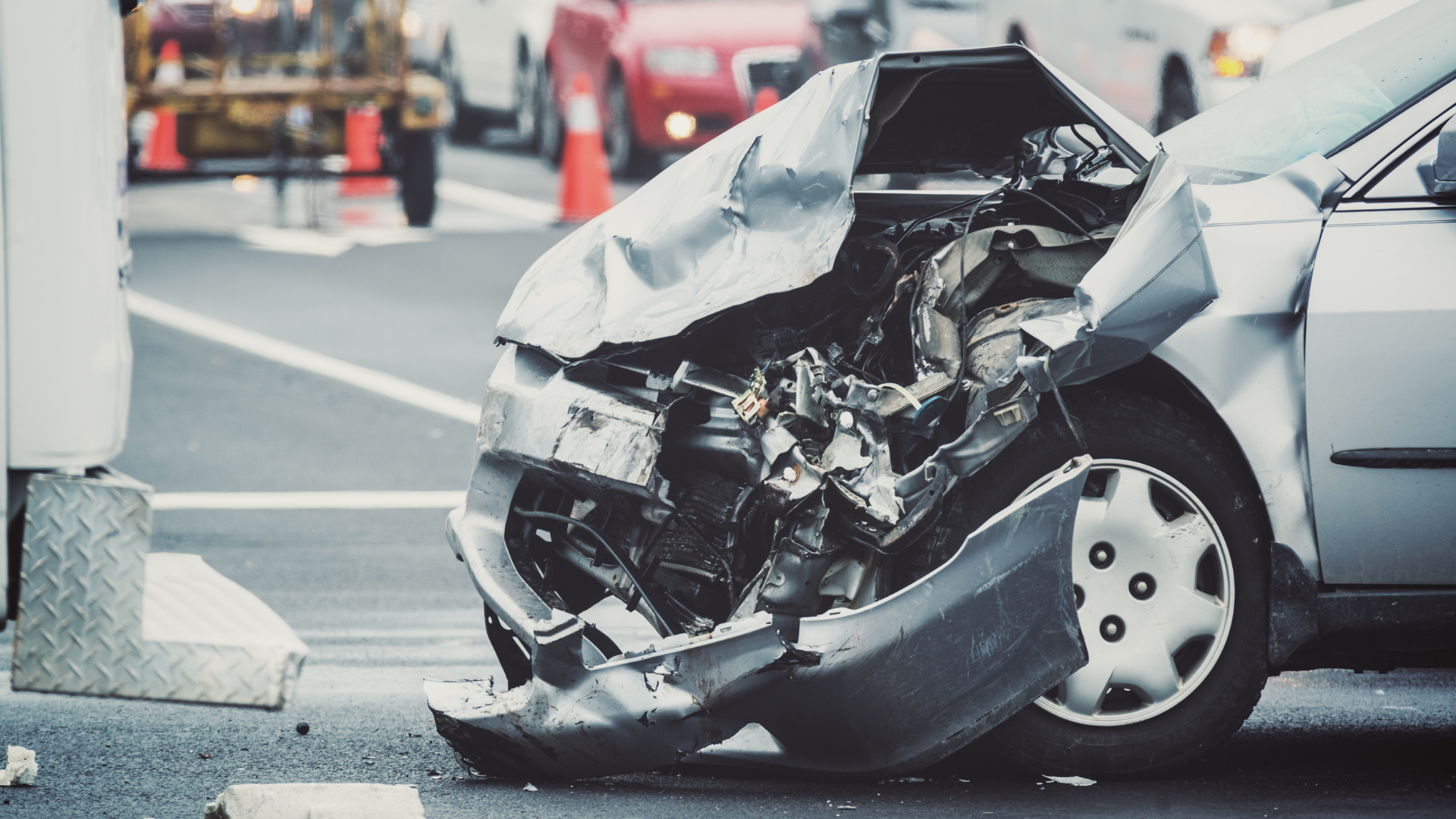
A car accident can mean losses left and right. It might leave you facing property repair costs, lost wages, and a mountain of healthcare expenses. Then, the insurance company you have paid for years tells you that a deductible applies. That raises an obvious question: Who pays the deductible in a car accident claim?
In many cases, the answer is you, but it depends on the type of insurance involved, the terms of your policy, and how the claim gets resolved. You may also have the option to recover your deductible payment from an at-fault party.
Don’t sit and wonder about how to cover accident-related expenses; talk to an experienced Lakeland car accident attorney about your options. Attorney Tim Shanahan of Maranatha Law has settled many cases for hundreds of thousands of dollars, and he is not afraid to fight in court to win the justice you deserve. When you have a car accident claim, Tim can help you avoid unnecessary costs and maximize your damages.
How Does Florida’s No-Fault Insurance System Work?
Florida’s Motor Vehicle No-Fault Law requires qualifying vehicle owners to maintain Personal Injury Protection (PIP) PIP insurance that pays up to $10,000. While not required, you can also purchase no-fault collision coverage to pay for accident-related damage to your car. “No-fault” does not mean that nobody caused the accident. It means that PIP and collision coverage can provide certain benefits without first deciding which driver caused the crash.
Florida PIP generally pays for health care and disability benefits. Medical benefits typically cover 80% of reasonable expenses for medically necessary treatment. And to qualify for medical benefits, an injured person generally must receive initial services and care within 14 days of the accident. PIP also pays disability benefits to cover 60% of lost income and lost earning capacity, and you can receive disability payments every two weeks.
In general, you submit a claim for PIP or collision benefits to your own insurance company. And because you make these claims through your own insurer, the answer to the question of who pays the deductible in a car accident can be tricky.
What Is a PIP Deductible in Florida?
Florida law permits an insured to select a PIP deductible. Insurers must offer deductible options of $250, $500, and $1,000.
The election can apply to the named insured alone or to the named insured and their dependent relatives living in the same household. The PIP deductible a Florida policyholder selects creates an amount that must be paid out of pocket before the policyholder has access to PIP benefits.
Am I the One Who Pays the Deductible in a Car Accident Even If I’m Not at Fault?
Potentially, yes.
The fact that another driver caused the collision does not automatically eliminate the deductible you selected under your own policy. Collision coverage and PIP coverage are designed to provide benefits without making fault the first issue, so you will likely have to pay some money on your own before you can access the benefits. That can understandably feel unfair. However, your insurance claim may not end with your collision or PIP policy.
What About PIP and Collision Deductible Reimbursement?
As noted above, PIP benefits do not pay 100% of medical expenses nor 100% of your wage losses, and they do not pay for property damage. And the limits on your collision coverage may not pay for all of your property damage. If the payments you receive from your PIP or collision coverage are insufficient, you can start a civil lawsuit against the at-fault party to recoup your other losses and receive PIP and collision deductible reimbursement. You may also have the right to file a claim under the at-fault party’s property damage liability coverage.
How Does Property Damage Liability Coverage Work?
PIP and collision policies cover harm to their own insureds, but property damage liability (PDL) coverage is different. PDL pays for damage an insured causes to another person’s car or property. And Florida law requires vehicle owners to maintain at least $10,000 in PDL coverage.
This distinction matters when asking who pays the deductible in a car accident in Florida.
If another driver causes your accident and their liability insurer accepts responsibility, you may pursue a property damage claim against that driver’s coverage. In that case, the at-fault driver likely pays the deductible.
What If the Only Damage Is Damage to My Windshield?
Florida has a specific rule for many windshield damage cases. When an insurance policy issued in Florida provides comprehensive or combined additional coverage, the policy’s deductible provisions do not apply to damage to the windshield of a covered motor vehicle. Caveats like this illustrate why it is important to identify the exact type of insurance coverage involved in your case before determining what you owe.
What If Both Drivers Share Fault?
Not every crash has one driver who is 100% responsible. So, Florida law provides a comparative fault system in negligence cases to resolve disputes among multiple at-fault drivers.
First and foremost, you cannot recover damages if you are more than 50% at fault for the accident. And if you are only 50% at fault or less, the law reduces your damages based on your percentage of fault. Also, judgments against liable parties are based on their percentages of fault.
Under the comparative fault rules, determining the level of fault each individual has can become a bitter and prolonged fight between the parties and their insurers. That level of dispute may be a reason to seek coverage from your no-fault policies before demanding payment from an at-fault driver.
How Do I Prove My Right to Damages?
If insurers disagree over who caused the crash and the level of damage caused, the amount that can ultimately be recovered may depend on the evidence you provide. You may need to provide evidence that includes:
- Photographs,
- Videos,
- Medical reports,
- Invoices,
- Witness statements,
- Repair estimates,
- Crash reports,
- Receipts,
- Healthcare bills,
- Wage statements,
- Expert testimony, and
- Other records.
Collecting this evidence and presenting it in the most favorable light becomes exponentially easier when you have an experienced attorney handling your case.
What About Subrogation?
After an accident, you can seek payment from your own insurer and from the at-fault party. Requesting compensation from both sources can be a great way to ensure all your expenses and losses are covered.
However, your insurer has the right to seek reimbursement if the money you receive from the at-fault party pays for losses already paid for by your insurer. This reimbursement is called subrogation.
A subrogation claim can be a financial surprise for many accident victims. So, being aware of your insurer’s rights and properly timing your claim and any subsequent suits is often vital to getting the most out of your case. Our firm has many years of experience and can develop a strategy to protect your interests and peace of mind.
When Should I Call a Florida Car Accident Lawyer?
A PDL or PIP deductible in Florida may seem like a small part of an insurance claim. But after a serious accident, it can be connected to much larger issues.
Contacting a lawyer right away in any case can be the best course of action. But if you have questions about whether now is the right time to hire counsel, consider speaking with a lawyer when you:
- Have suffered significant injuries,
- Have substantial medical expenses,
- Have missed work,
- Are facing a disputed property damage claim,
- Cannot get clear answers from an insurer, or
- Disagree with an insurer about fault.
Legal help can also become important when several insurance policies apply or when you need to determine which losses remain unpaid after receiving PIP and other benefits.
An experienced attorney can help you:
- Review and understand the terms of your insurance policy,
- Gather strong evidence to support your claim,
- Initiate and handle court proceedings,
- Speak to the insurance companies on your behalf,
- Negotiate a fair settlement,
- Coordinate coverage between multiple policies, and
- Maximize your damages.
In general, the sooner you speak to an attorney about your accident and your needs, the better.
Maranatha Law Can Help You Understand What You Really Owe
You should not have to become your own insurance adjuster or benefactor when an at-fault party hurts you in a car wreck. You deserve compensation and time to heal.
While you do the important work of getting better, Maranatha Law can review the accident, the applicable insurance coverage, and the losses you suffered. We have years of experience and top-level training, and we can help determine what insurance and the defendant should pay.
If you were injured in a Florida car accident, contact Maranatha Law to discuss your case and learn what options may be available to you. You can reach out to us online or call us to schedule a consultation.
Legal References Used to Inform This Page
To ensure the accuracy and clarity of this page, we referenced official legal and other resources during the content development process:
- Required Personal Injury Protection Benefits; Exclusions; Priority; Claims, Florida Statutes § 627.736 (2026).
- Personal Injury Protection; Optional Limitations; Deductibles, Florida Statutes § 627.739 (2026).
- Application of the Florida Motor Vehicle No-Fault Law, Florida Statutes § 627.7407 (2026).
- Required Security, Florida Statutes § 627.733 (2026).
- Comparative Fault, Florida Statutes § 768.81 (2026).
- Collateral Sources of Indemnity, Florida Statutes § 768.76 (2026).
- Comprehensive Coverage; Deductible Not to Apply to Motor Vehicle Glass, Florida Statutes § 627.7288 (2026).
- The Florida Bar, Consumer Pamphlet: Automobile Insurance.
- Florida Highway Safety and Motor Vehicles, Florida Insurance Requirements.