


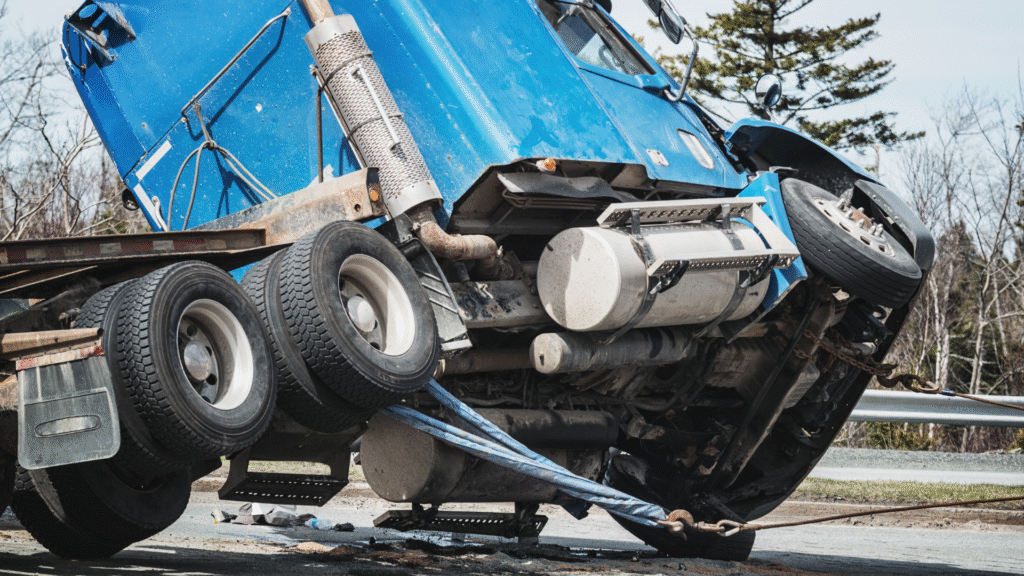
When a collision leaves you seriously injured, Florida truck accident liability can become a complicated legal dispute over who caused the crash and who can compensate you. Although a trucking company may employ the driver, separate businesses are often responsible for loading the cargo and maintaining the truck, meaning the party potentially responsible is not always clear. Meanwhile, medical bills accumulate, work is interrupted, and multiple insurance companies may be working to limit their financial accountability.
At Maranatha Law, founding attorney Tim Shanahan brings more than a decade of experience representing injured Floridians. A graduate of Stetson University College of Law, he trained under some of the country’s leading personal injury trial attorneys and has represented clients throughout Florida since 2015. Based in Lakeland, our firm knows how to investigate commercial trucking operations, challenge insurance companies, and build cases against the businesses responsible for serious collisions.
Contact us now for a free case evaluation and learn about your legal options.
Can More Than One Party Be Responsible for a Truck Accident?
Yes. Multiple parties can share liability for a truck accident in Florida. Unlike most car accidents, commercial truck collisions often involve several businesses with different responsibilities. Federal trucking regulations may also apply alongside Florida negligence laws.
For example, a truck that loses control on I-4 near Lakeland may have been speeding, operating with poorly maintained tires, and carrying an improperly secured load. Each failure could contribute to the collision, making it necessary to investigate everyone involved rather than holding only the driver responsible.
Who Can I Hold Responsible for a Truck Accident in Florida?
In a multiple liable parties truck accident claim, each person or business may be held responsible for their negligence that contributed to the collision. Determining liability requires investigating what each party did, their safety responsibilities, and how their actions or failures caused the accident.
Truck Driver
Drivers can be held liable when they fail to use reasonable care behind the wheel, such as:
- Speeding,
- Distracted or impaired driving,
- Following too closely,
- Failing to yield at an intersection,
- Unsafe lane changes,
- Failing to stop at a red light or stop sign, and
- Driving while dangerously fatigued.
Drivers may also violate applicable federal hours-of-service rules or continue operating a truck they know is unsafe.
To establish liability, your attorney must connect the driver’s conduct to the collision and resulting injuries. A traffic citation is not required to prove negligence.
Trucking Company
A trucking company can be held liable when its own negligence contributes to an accident.
Examples include:
- Negligent hiring. Hiring drivers without checking their qualifications, driving history, or records of serious safety violations.
- Inadequate training and supervision. Failing to train drivers on safe truck operation or address repeated dangerous driving behavior.
- Unsafe scheduling practices. Pressuring drivers to meet delivery deadlines that encourage speeding, fatigue, or violations of federal hours-of-service regulations.
- Poor truck maintenance. Failing to conduct required inspections, repair known mechanical problems, or remove unsafe trucks from service.
The distinction between driver vs. trucking company liability also involves the employer’s responsibility for its employees. In a vicarious liability truck accident claim, a trucking company may be held responsible when its employee negligently causes an accident while performing work duties.
This means you can sue the trucking company for its own negligence or for its employee’s actions. An attorney can investigate the employment relationship and applicable trucking regulations to determine liability.
Cargo Loader
A cargo loading company may be held liable if it improperly loads or secures freight, causing the truck to become unstable or lose its load during transport.
Common examples of negligent cargo loading include:
- Uneven weight distribution. Placing too much weight on one side of the trailer can make the truck difficult to control and increase the risk of a rollover, particularly during turns.
- Unsecured cargo. Failing to use proper straps, chains, or other restraints can allow freight to shift suddenly or fall onto the roadway, potentially causing a collision.
- Overloading. Exceeding safe weight limits can increase stopping distances, strain brakes and tires, and make the truck harder to control.
- Improper stacking. Stacking cargo too high or without adequate support can cause freight to topple during braking or turning, affecting the truck’s balance.
An attorney can investigate how the freight was loaded and determine if negligence contributed to the accident.
Truck Maintenance Company
A third-party maintenance company may be held liable if it performs faulty repairs or fails to identify dangerous mechanical problems during an inspection.
Examples include:
- Improperly repairing brakes,
- Overlooking worn tires, or
- Failing to fix steering or suspension problems.
These mistakes can cause brake failures, tire blowouts, or loss of vehicle control, potentially leading to serious collisions.
Maintenance records, repair invoices, and mechanical inspections can help establish whether the company’s negligence contributed to the accident.
Truck Manufacturer
The manufacturer of a truck, trailer, tire, or other component may face a product liability claim when a defect contributes to an accident or worsens injuries. The defect may involve a dangerous design, a manufacturing error, or an inadequate warning about a known risk.
An investigation may require examination of the damaged part and testimony from qualified engineers.
Government Entity
A government agency may be held liable if it fails to maintain safe road conditions and that negligence contributes to a truck accident. Examples include failing to repair dangerous potholes, address known roadway hazards, replace missing traffic signs, or maintain safe construction zones.
However, claims against government agencies are more complicated because Florida has specific laws, notice requirements, and deadlines for these cases. An attorney can determine whether a government agency may be held responsible and follow the proper legal procedures to pursue compensation.
What Should I Do After a Truck Accident If I Think the Driver Isn’t the Only One Responsible?
Truck accident liability in Florida often depends on evidence held by trucking companies and other businesses involved in the vehicle’s operation. Taking the appropriate steps after a collision can help preserve important evidence, identify additional responsible parties, and protect your right to pursue compensation.
Here’s what to focus on:
- Get medical attention. Call 911 for emergencies and have injuries evaluated promptly. Medical records help establish the nature and extent of the harm caused by the collision.
- Report the accident. Contact law enforcement. Depending on the location, the Florida Highway Patrol, Polk County Sheriff’s Office, or another agency may respond and prepare a crash report.
- Document what you safely can. Photograph the tractor and trailer, company markings, license plates, cargo on the roadway, vehicle damage, and road conditions. Get witnesses’ names and contact details.
- Preserve your own records. Keep medical bills, treatment instructions, time-off-work documentation, photographs, and correspondence with insurers.
- Avoid speaking with the trucking company’s insurer. The insurance company’s goal is to minimize any potential payout. Adjusters may use your statements to dispute liability or reduce your compensation, so consult a lawyer before discussing the accident or accepting a settlement offer.
- Contact a truck accident attorney. A lawyer can investigate the accident, identify all potentially liable parties, gather evidence to support your claim, and handle the legal process while you focus on healing.
Do not assume the police report identifies every responsible party. A detailed investigation may uncover negligence that was not apparent to the officer responding to the crash.
Who Pays If Multiple Parties Are Liable in a Truck Accident?
When several parties contribute to a truck accident, more than one person or business may be responsible for your damages. In most cases, compensation comes from the liability insurance policies covering those responsible for the crash.
Depending on the circumstances, payment may come from:
- The trucking company’s insurance. Commercial liability insurance may cover accidents caused by employee drivers or the trucking company’s own negligence. Federal regulations generally require certain interstate trucking companies to carry at least $750,000 in liability coverage.
- Other responsible businesses’ insurance. If a cargo loading company, maintenance contractor, or another business contributed to the accident, its liability insurance may also provide coverage.
- Your own insurance. Florida personal injury protection (PIP) may cover certain initial medical expenses and lost wages, regardless of fault. Other coverage, including uninsured/underinsured motorist insurance, may also apply.
Under Florida’s comparative negligence law, each independently negligent party is generally responsible for its percentage of fault. For example, if a trucking company is found 70% responsible and a cargo loading company 30% responsible, each would generally be liable for its respective share of the damages.
Your own actions can also affect compensation. If you contributed to the accident, your recovery is reduced by your percentage of fault. If you’re found more than 50% responsible, you generally cannot recover damages in an ordinary negligence claim.
Insurance companies may try to increase your share of fault to reduce or avoid payment. A truck accident lawyer can challenge these arguments, identify applicable insurance policies, and pursue compensation from the responsible parties.
Why Should I Hire a Florida Truck Accident Lawyer?
Trucking companies and their insurers often begin investigating an accident immediately, seeking ways to limit their financial liability. Florida truck accident liability can involve several businesses, each with its own insurance company and legal team. Having an attorney who understands Florida laws, federal trucking regulations, and court procedures can help protect your rights, challenge attempts to shift blame, and pursue the compensation you deserve.
An attorney can help by:
- Investigating each party’s role. Ownership records, driver qualifications, contracts, and shipping documents may reveal businesses missing from the police report.
- Securing technical evidence. Lawyers can obtain onboard data, electronic logs, repair histories, and surveillance footage before those records are deleted or overwritten.
- Applying the correct law. Federal motor carrier regulations, Florida negligence law, comparative fault rules, and court procedures may all affect a single claim.
- Dealing with insurance companies. Counsel can respond to attempts to shift blame, demand appropriate coverage information, and assess settlement offers against documented losses.
- Preparing for litigation. If negotiations fail, an attorney can file suit against the appropriate defendants, pursue discovery, and present the evidence in court.
An attorney can also evaluate the full extent of your losses before you accept a settlement. Serious truck accidents may result in ongoing medical expenses, long-term disabilities, and reduced earning capacity.
Truck Accident Liability in Florida: Understand Your Legal Options
When several parties are involved in a truck accident, their insurance companies may dispute responsibility or attempt to shift blame. You need an attorney who can establish the facts, apply Florida liability laws, and pursue your claim against the appropriate parties.
At Maranatha Law, we handle insurance negotiations and prepare cases for trial when necessary. We offer free consultations and work on a contingency fee basis, meaning you owe no attorney fees unless we recover compensation for you.
Contact Maranatha Law today to discuss your accident, understand your legal options, and determine your next steps.
Legal References Used to Inform This Page
To ensure the accuracy and clarity of this page, we referenced official legal and other resources during the content development process: