


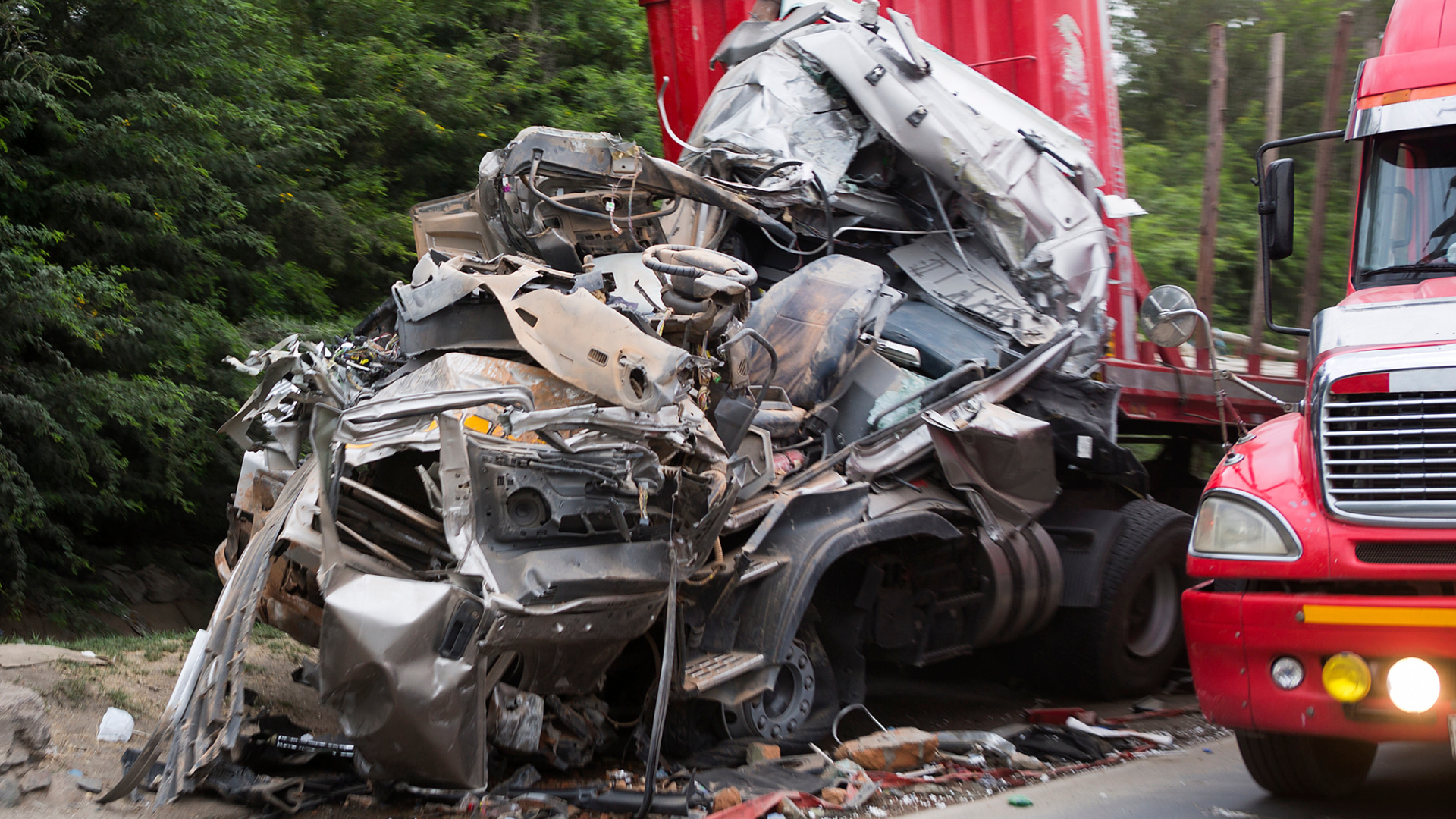
Losing someone you love in a truck accident is one of the most painful experiences a family can endure. One moment, your loved one was driving home, heading to work, or simply going about their day. The next, you are facing funeral arrangements, overwhelming grief, and a future that feels uncertain. Alongside that grief often comes confusion: Who is responsible? What are our rights? How do we protect our family financially?
At Maranatha Law, our Lakeland wrongful death lawyer knows that no lawsuit can replace the person you lost. But Florida law does provide a path for accountability and financial security. If your family is facing the aftermath of a wrongful death in a truck accident, this guide can help you understand how Florida’s wrongful death statutes work, who can file a claim, and what compensation may be available.
You do not have to figure this out on your own.
The Serious Nature of Truck Accidents in Florida
Commercial trucks travel Florida’s highways every day, transporting goods across the state and country. Because of their massive size and weight, collisions involving tractor-trailers, delivery trucks, and other commercial vehicles often result in catastrophic or fatal injuries.
According to the Florida Department of Highway Safety and Motor Vehicles (FLHSMV), Florida consistently reports thousands of crashes involving large trucks each year, including many fatalities. Nationally, the National Highway Traffic Safety Administration (NHTSA) has found that large trucks are involved in a significant percentage of deadly highway crashes, and in 2023, large trucks accounted for 9% of all vehicles involved in fatal traffic crashes.
Behind every statistic is a family left grieving. When a death due to a truck accident occurs, the legal system provides a structured way for surviving family members to seek justice and financial support.
What Is a Wrongful Death in a Truck Accident Under Florida Law?
Florida’s wrongful death claims are governed by the Florida Wrongful Death Act. This law defines a wrongful death as a death caused by the “wrongful act, negligence, default, or breach of contract or warranty” of another party.
In the context of a fatal truck crash, this may include negligent or reckless conduct such as:
- A truck driver who was distracted, impaired, or fatigued;
- A trucking company that failed to properly train or supervise its drivers;
- Violations of federal safety regulations, including hours-of-service rules;
- Negligent maintenance or unsafe loading of cargo; and
- Defective truck parts or mechanical failures.
Truck accident cases are often more complex than standard car accident claims because multiple parties may share responsibility. In addition to Florida negligence law, regulations issued by the Federal Motor Carrier Safety Administration (FMCSA) frequently play a role in establishing liability.
When safety rules are violated and that violation contributes to a fatal crash, it can significantly strengthen a wrongful death truck accident claim.
Who Is Eligible to File a Wrongful Death Claim in Florida?
One of the most common questions families ask is who has the legal right to file the lawsuit.
Under Florida law, the wrongful death claim must be filed by the personal representative of the deceased person’s estate. This is usually the individual named in the will. If no will exists, the court will appoint someone to serve in this role.
Although the personal representative files the case, it is brought on behalf of specific survivors identified by law. These survivors may include:
- The surviving spouse;
- Minor children, and in some cases, adult children;
- Parents of the deceased; and
- Blood relatives or adoptive siblings who were partly or wholly dependent on the deceased for support or services.
Florida law carefully defines which survivors may recover certain types of damages. For example, adult children may only recover damages for mental pain and suffering if there is no surviving spouse. These distinctions can significantly affect the value and structure of the claim.
Because of these legal nuances, having knowledgeable legal guidance is essential.
What Damages Can Be Recovered in a Wrongful Death Truck Accident Case?
No financial award can ever replace your loved one. However, Florida law recognizes that surviving families suffer both economic and emotional losses after a fatal truck crash, which may include:
- Medical expenses related to the final injury,
- Funeral and burial expenses,
- Loss of the deceased’s income and benefits,
- Loss of companionship and protection for a surviving spouse,
- Loss of parental guidance and instruction for minor children,
- Mental pain and suffering for qualifying survivors, and
- Loss of support and services the deceased would have provided.
In addition, the estate may recover lost earnings from the date of injury to the date of death, along with the projected net accumulations the deceased would likely have earned over their lifetime.
Calculating these damages often requires financial experts who can project future income, benefits, and contributions. Insurance companies frequently challenge these projections, which is why thorough documentation and experienced advocacy are critical.
The Time Limit for Filing a Wrongful Death Lawsuit
Grief can make it difficult to think about legal deadlines. However, time limits apply to your right to take legal action. In Florida, a wrongful death lawsuit must generally be filed within two years from the date of death. Courts strictly enforce this statute of limitations.
If the deadline passes, your family may permanently lose the right to pursue compensation. Acting promptly also helps preserve key evidence, such as electronic logging data, maintenance records, and black box information from the truck.
If you are considering legal action after a wrongful death due to a truck accident, early consultation is essential.
Why Trucking Companies and Insurers Fight These Claims
Fatal truck accident cases often involve substantial insurance policies. Because the financial exposure can be significant, trucking companies and insurers frequently defend these claims aggressively. They may attempt to:
- Shift blame to the deceased driver,
- Argue that the crash was unavoidable,
- Dispute the amount of projected lifetime earnings, and
- Minimize claims of emotional suffering.
These tactics can feel overwhelming, especially when you are still grieving. Having experienced wrongful death lawyers handle negotiations helps protect your family’s rights.
How Maranatha Law Helps Families Across Florida
At Maranatha Law, we approach wrongful death cases with compassion, integrity, and determination. Attorney Tim Shanahan built this firm on a simple but powerful principle: Do the right thing, no matter what.
We know that behind every case is a family whose life has been shattered. Our role is to shoulder the legal burden so you can focus on healing. When you work with Maranatha Law, we will:
- Conduct a thorough investigation into the crash,
- Preserve critical evidence before it disappears,
- Work with accident reconstruction and financial experts,
- Handle all communication with insurance companies, and
- Prepare your case for trial if a fair settlement is not offered.
We serve clients throughout Lakeland, Central Florida, the Tampa Bay area, and across the state. We are not a high-volume firm chasing quick settlements. We fight for full and fair compensation.
If your family is facing the unimaginable loss caused by a death due to a truck accident, Maranatha Law is here to stand beside you. We will explain your rights under the Florida Wrongful Death Act, guide you through every step of the process, and fight tirelessly for the justice your family deserves.